
HOLOCAUST PING-PONG
Guest Essay by Tzvi

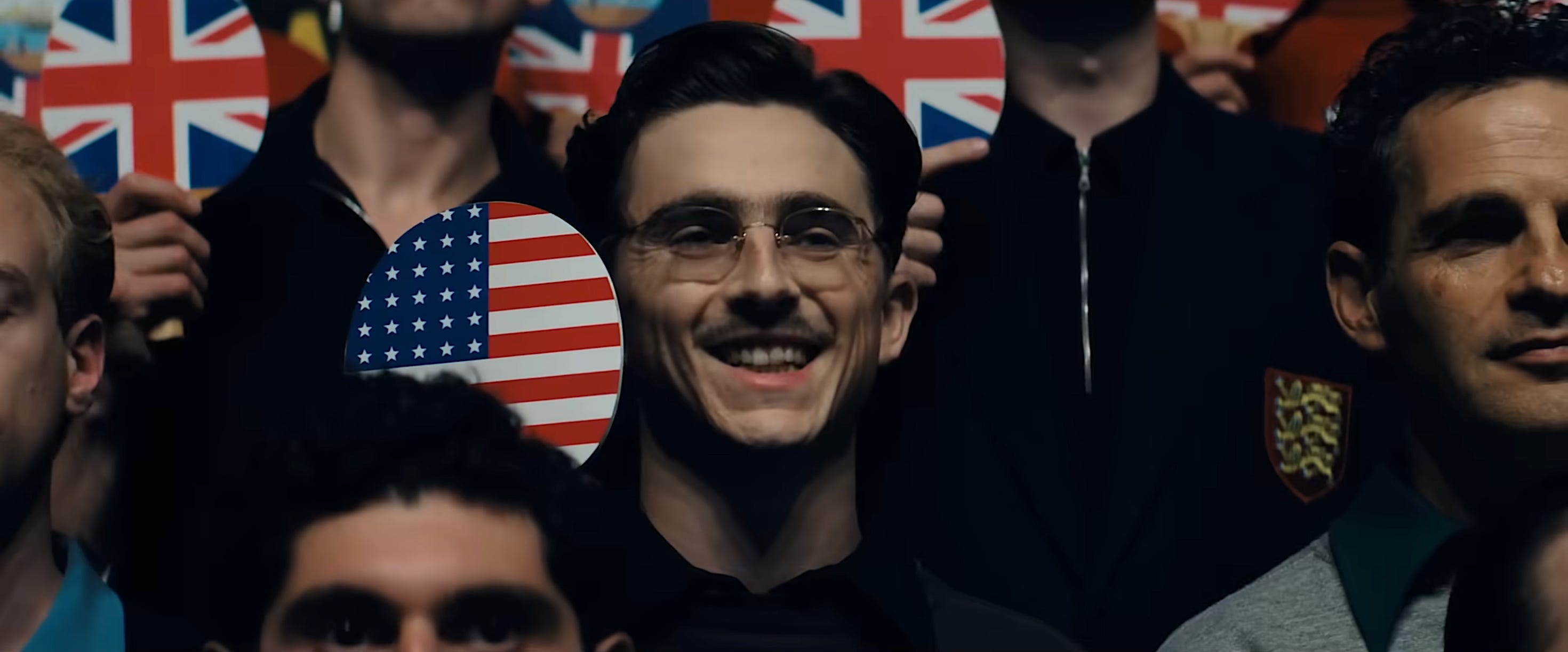
A young shoe salesman dreams of becoming something greater in Josh Safdie’s epic, Marty Supreme. Marty Mauser, played by superstar Timothée Chalamet, hails from the Lower East Side tenements and yearns to become the greatest player table tennis has ever known, but not just a master of the sport itself. Marty sees himself as something of a visionary, a wannabe iconoclast. He proposes the creation of a more visible orange ping-pong ball instead of white, this way players don’t have to wear black anymore. He goes on charismatic rants to the press, spinning fake tales of his upbringing, reminiscent of Bob Dylan, whom Chalamet (coincidentally) portrayed and was nominated for last year.
Mauser, whose nom de guerre is Marty Supreme, stops at nothing to fulfill his dreams. He seems to care little about his lover and childhood friend Rachel, played by Odessa A’zion, who happens to be married to another man, Ira, or his mother, who tries to stop him from his globetrotting ping-pong adventures. Mauser, driven by some invisible force, will settle for nothing less than ultimate greatness. On his quest to reach such heights, he cheats, steals, neglects his family and friends, is hunted by a small-time crook (brilliantly played by Abel Ferrara), humiliated in the most obscene manner, and nearly murdered, all in order to be the Muhammad Ali of table tennis. What is driving Marty Mauser to sacrifice everything to become supreme?
Early in the film, Mauser holds court to a group of journalists and, remarking on his friend and opponent Bela Kletzky (Geza Rohrig), says, “I’m gonna do to him what Auschwitz couldn’t.” The reporters recoil and gasp, and Marty quickly follows up with, “I’m Jewish, so I can say that,” describing himself as “the ultimate product of Hitler’s defeat.”
In Marty’s first encounter with pen mogul Milton Rockwell, portrayed by TV personality Kevin O’Leary, a Mr. Potter from It’s a Wonderful Life archetype, he mentions his son fought in the Pacific and insinuates he died on account of the Jews. In response, Marty insists Bela tell him about his time in Auschwitz, when he found a beehive and doused himself in honey so his fellow inmates could lick it off his body.
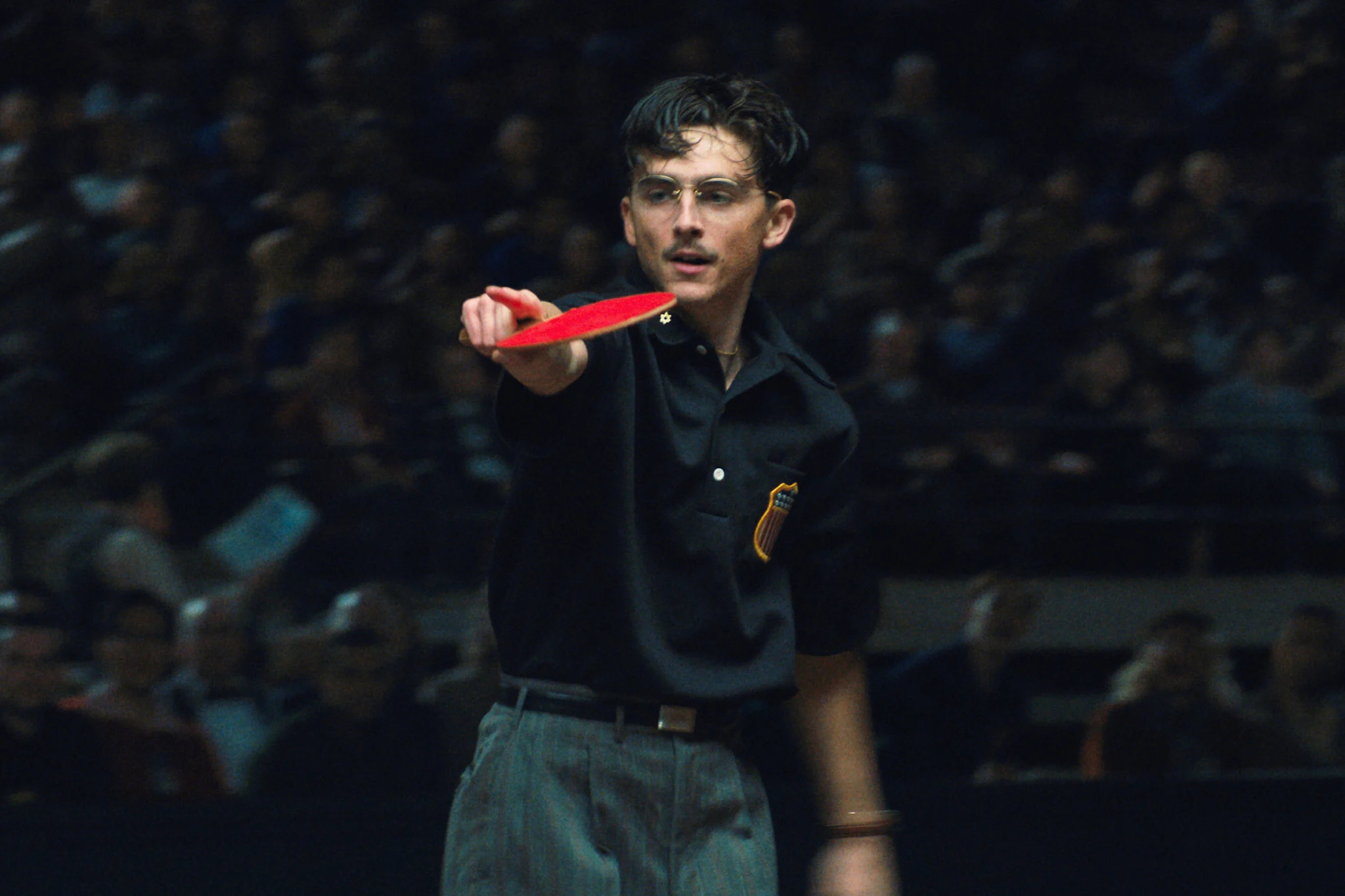
This is the scene that uplifts Safdie’s part sports film, part dark comedy, part thriller to new heights. It infuses it with a sanctity, as we see the starving Holocaust victims lapping up the honey with an overwhelming operatic score by Daniel Lopatin, the electronic artist also known by his stage name Oneohtrix Point Never, irreverently dubbed “Holocaust Honey.” The scene never explains itself, but it brings the nonstop, nerve-racking, hip-hop-signature Safdie rhythm to a halt, for this moment of immense sacrifice that is conveyed to us as a moment of near-religious rapture.
These scenes that revolve around Marty’s Jewishness have stirred much controversy in the ivory tower algorithm, cine-verse of Twitter and Letterboxd.
“1950s US Jewishness clearly matters a lot in this movie but I don’t accept for a minute that Marty is oppressed. Sure, there’s some ambient antisemitism, but this is a citizen of the richest country in the world with a good steady job whose problems are entirely of his own making,” one X user, @davidklion, loftily writes.
Others see Marty exploiting his friend’s terrible suffering for his own myth. Mauser, who is American-born and bred, knows nothing of such terror.
“The entertaining Marty Supreme follows the exploits of an entitled white man who scams through life, hurting those along his path. The emotional ending is unearned and shallow, much like the movie itself. Unlike the protagonist in Uncut Gems, Marty has no soul, no emotional pull,” bemoans another, @ReelTalker.
“Marty makes frequent reference to Auschwitz not in order to distinguish European Jewish experience from his own but because he thinks they’re connected, even inseparable, an obvious self-dramatizing exaggeration that’s a defining trait,” New Yorker critic Richard Brody posits.
Such trite theories of this nature miss the paddle for the ball. There’s a more “shoe salesman’s” simplistic angle people are leaving off the proverbial shot list that contextualizes Safdie’s film in a different light.
There seem to be two inexorably intertwined themes coursing through the table tennis epic: the ‘ping’ of the ball striking the paddle — the ‘catalyst’ that launches it over the net — and the ‘pong’ of the ball connecting with the table — the ball’s ‘destiny.’
Marty’s ping or catalyst can be found in his ancestral roots. In a montage of Marty touring the world for the Harlem Globetrotters, he is seen next to the pyramids, where he breaks off a piece and brings it home to his mother. He justifies his historical desecration by saying, “We built them.”
The idea of the Hebrew slaves built the pyramids is an ahistorical cultural myth, inspired by the biblical account of Hebrew slavery to Pharaoh. This scene is still deeply moving and, for lack of a highfalutin word, badass. It cuts to the heart of Mauser’s philosophy: the suffering of his people is all part of a larger narrative, one that is biblical and cosmic, dating back thousands of years, beginning with slaves in Egypt all the way to the Lower East Side tenements.
The Lower East Side was home to hundreds of thousands of Jews, and those spared the horrors of the Holocaust had arrived earlier, fleeing violent gangs in Eastern Europe that slaughtered Jews en masse. It would not be far-fetched to assume the Mauser family were among those refugees, and Marty’s worldview likely would have been molded via osmosis of the “ambient melancholy/paranoia” around him.
The 50s indeed was a turning point for the Jewish experience in America. Post-Holocaust, antisemitism was on the decline, and many Jews saw great financial and cultural success. Yet, despite the decline of antisemitism in the States, Jews still looked over their shoulders, afraid the old hatreds would rekindle. Many turned to forms of assimilation as an antidote, hence to this day, many in the public sphere have successfully ‘Americanized’ themselves: Bob Dylan from Robert Zimmerman, Gene Simmons from Chaim Witz, and Natalie Portman from Neta-Lee Hershlag, to name a few. But not Marty Mauser, who openly dons a Star of David necklace and speaks candidly and unflinchingly of Jewish suffering. Mauser does not need to lay low, and apologize for being the world’s punching bag, defying the lamb-to-the-slaughter archetype.
Mauser is indeed an “entitled man,” as @ReelTalks proposes, yet he believes he is entitled on a cosmic level, for the centuries of suffering the heavens brought upon his kin.
“I am America. I am the part you won’t recognize. But get used to me. Black, confident, cocky. My name, not yours. My religion, not yours. My goals, my own. Get used to me.” These were the words of the greatest sports champion in American history, Muhammad Ali, both a sports superstar and a vital figure in the civil rights movement, changing the way America saw Black people. He was unapologetic and proud of his identity. This ethos of the greatest champion of all time is imbued into the DNA of Marty Supreme. Ethnic pride, swagger, egomania, all as far from the typical mousy Jewish man in films as Woody Allen is to a straight posture.
The “pong” of Mauser’s life, the ‘destiny,’ is found in how Marty interprets the brutal spanking of history’s paddle. (Towards the end of the film, Marty is literally spanked on the behind by the WASP-y Milton Rockwell, which the tabloids have gone into a frenzy over, due to Chalamet’s refusal to use a butt double.) Instead of keeling over and succumbing to feelings of victimhood, Marty DREAMS BIG — the tagline of the film — believing without a doubt that he is destined for greatness, not in spite of his history, but because of it.
It might be seen as a stretch, but the unwavering individual in pursuit of greatness, raging against the powers that be, is synonymous with the quintessential Americana cinema of Frank Capra. This American archetype, the belief in being able to change the world against all odds through utter conviction to one’s ideals, is something we don’t see often in modern movies.
Perhaps that’s why so much debate has erupted online, for many see the creed of “dream big” as derogatory rather than an ideal. Pessimism, cynicism, and nihilism are ubiquitous in modern American films. Such themes are somewhat justifiable, as they are a reflection of the serious economic and social crisis the country has been undergoing. In face of the crushing tide of despair, Marty Supreme is now the highest grossing domestic film for the brand-name boutique film studio A24. One can hypothesize that aside from its star and its acclaimed director, and the very popular sport of ping-pong, there is something about the overly sincere, unironic macho egoist protagonist that is refreshing to audiences.
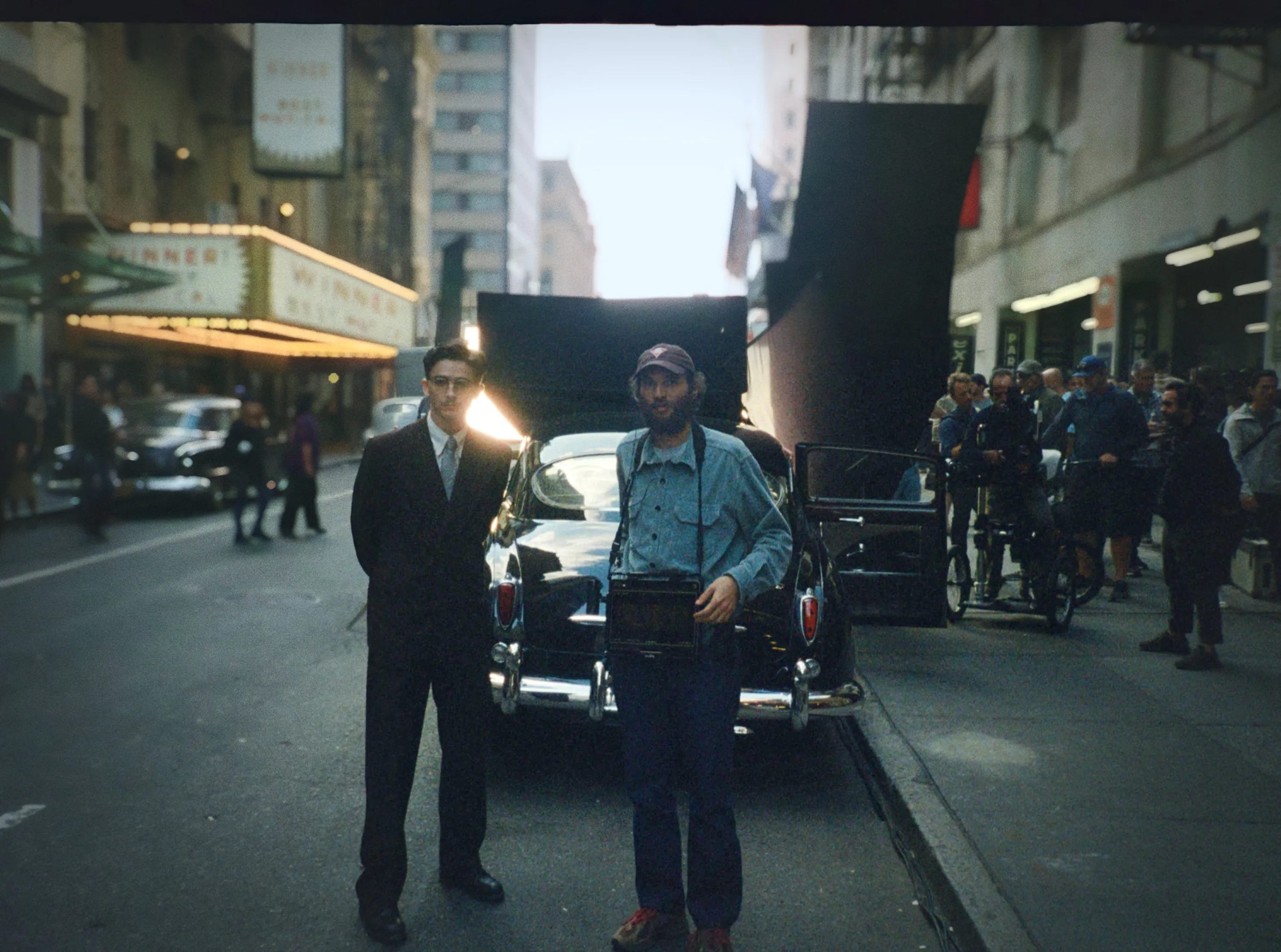
I’d be remiss to omit Chalamet’s captivating press tour, which certainly helped the film’s monumental success, from him marching through the streets of NYC flanked by figures with orange ping-pong balls for heads, to a hilarious Zoom meeting with the marketing team, like a scene from Ricky Gervais’s Extras, demanding they send orange blimps into the sky and light up the pyramids orange. These antics embody this unironic, sincere pursuit of dreams, and Chalamet himself admitted his ‘performance art persona’ is supposed to mirror the character he plays in the film.
Cassavetes once quipped, “maybe there really wasn’t an America, maybe it was only Frank Capra.” Capra’s films are centered around the individualistic altruist, who will stop at nothing to fulfill their destinies and go to war with the machine that forbids their pursuits. And while Capra’s characters wage war with institutions with less profanity and sex, Safdie’s Mauser is the realist version of the American myth, with all its warts (Chalamet’s facial skin is visibly pockmarked throughout the film), people who sacrificed everything so one day their achievements would be hewn into the pyramids of history. In these turbulent times, where people are overcome by nihilistic dread and hopelessness, where the dream factory itself is on the decline as streamers gobble up theaters, Marty Supreme cries out to us that dreams are still alive! We can go from slaves of Egypt and the bowels of Auschwitz to superstars. We just have to be willing to go to hell and back, for that is the stuff great dreams are made of.’’
READING LIST
Identity and the Holocaust: American Jewry in the 1950s [Digital Commons @ Cal Poly]
What the Jewish Name Changing Narrative Gets Wrong [Zocalo]
Jewish Americans [Ebsco]
Muhammad Ali: ‘I Am America’ [Freedom Forum]
How Muhammad Ali influenced the Civil Rights Movement [Aljazeera]
Tzvi is a film director from Brooklyn, New York. His debut feature film, Killer of Men, was made on a shoestring budget and met with critical acclaim. He also manages “Film Underground,” a screening series and collective that showcases lesser-known films from around the world with the hope of democratizing cinema. In his free time, he writes essays on film and short fiction.
Insta: @tzvi_shadowplayfilms
Insta: @filmunderground_
